Verja builds.
FRIDGARD protects.
The AI software builder for custom web applications.
In a conversation, you describe what your club, your practice, your law firm, your shop or your startup needs. Verja builds it — FRIDGARD carries it: on our own hardware in Germany, with European AI — hosted by us and operated for the long run.
Join the waitlistAccess opens in waves; signing up is non-binding.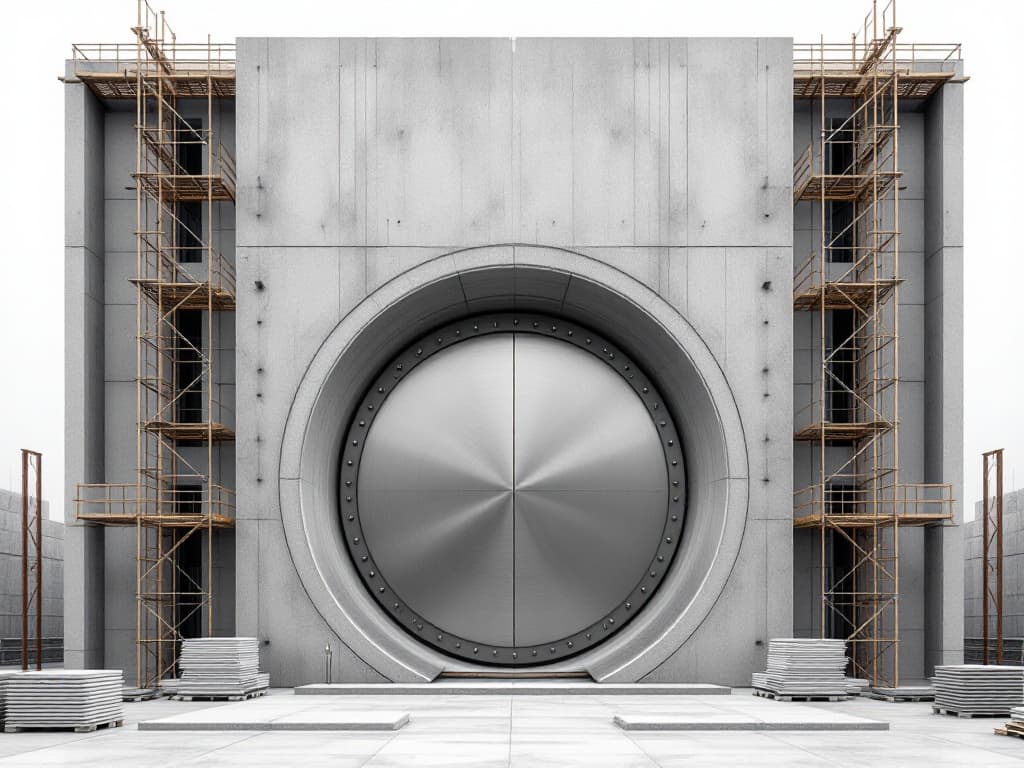
Process
Three steps, one solid result
No requirements document, no site builder, no project marathon: one conversation, one verification chain, one home.
01
You tell us.
In a conversation, you describe what your application should do, in your own words. Verja designs, you confirm the scope — only then is anything built.
02
Verja builds.
Every single change passes the verification chain, up to a run in a real browser. What fails at the gate does not get in.
03
FRIDGARD carries.
Your application moves into its own house: its own micro-VM with its own kernel, on our own hardware in Falkenstein. Operations, backups and updates: included for good.
Verja
Verja means: to protect
The name comes from Old Norse, and it is her mission. Verja is the agent of FRIDGARD: she listens, she designs, she builds, she keeps watch. For everything you see here, one simple rule applies: gold marks Verja, and only her.
She designs.
Your conversation becomes a draft: Verja proposes, you decide. You confirm the planned scope before anything is built.
She builds.
Every change that Verja builds must pass the verification chain: up to a run in a real browser, before you ever see it.
She keeps watch.
After go-live, Verja stays: operations, backups and updates are part of the deal for good, not just at launch.
The verification chain
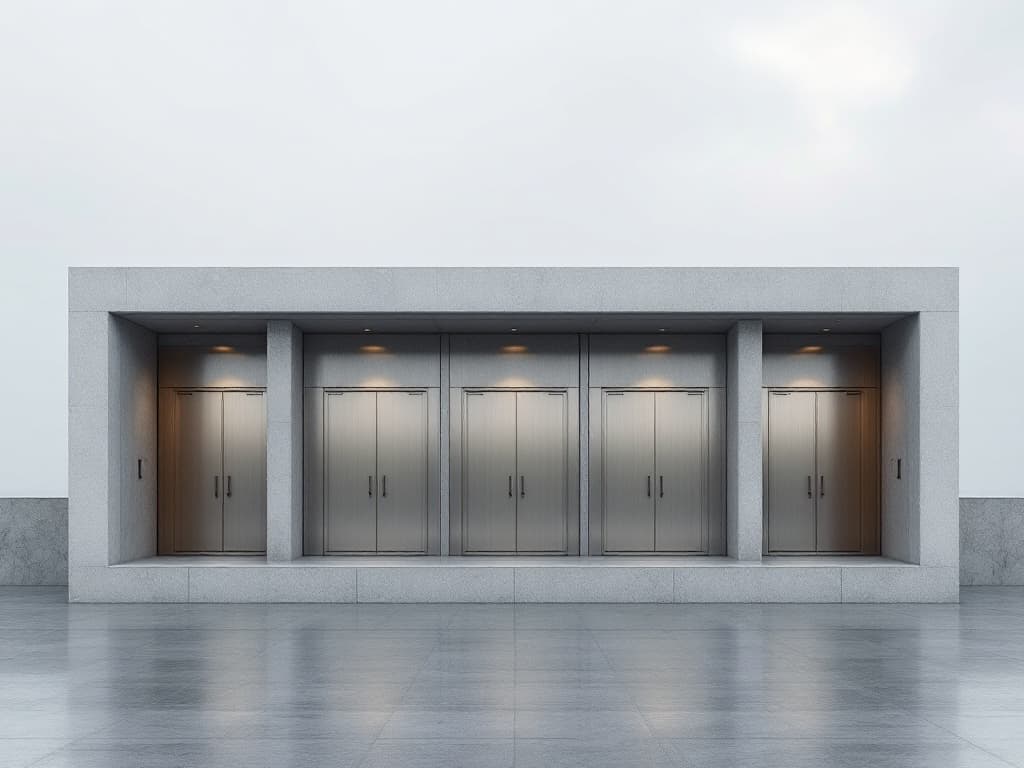
A sluice opens only once the previous chamber is sealed.
That is exactly how every change to your application works: five stations, always the same order, the first like the hundredth. What does not pass does not get through — years after go-live, too.
Run 1284 · turn 3
The browser test starts your application in a real browser and operates it. What does not run there does not count as built.

The data sheet
Four lines that say how your application is built, where it lives and who keeps it running.
Your application gets a dedicated micro-VM with its own kernel. Nothing is shared, with anyone — the vault is yours alone.
Hosted on our own hardware in Falkenstein, Germany. And exclusively European AI: models by Mistral from Paris, no detour through third countries.
Only what passes the verification chain gets in: every single change, up to a run in a real browser.
Hosting, operations, backups and updates are included for good. FRIDGARD carries your application for as long as it lives, not just at launch.
Examples
Every application gets a world of its own
Colour climate, type and order grow from your subject, not from a template. All nineteen worlds of the repertoire — one click opens the world as a live, usable application.
01–04 of 19
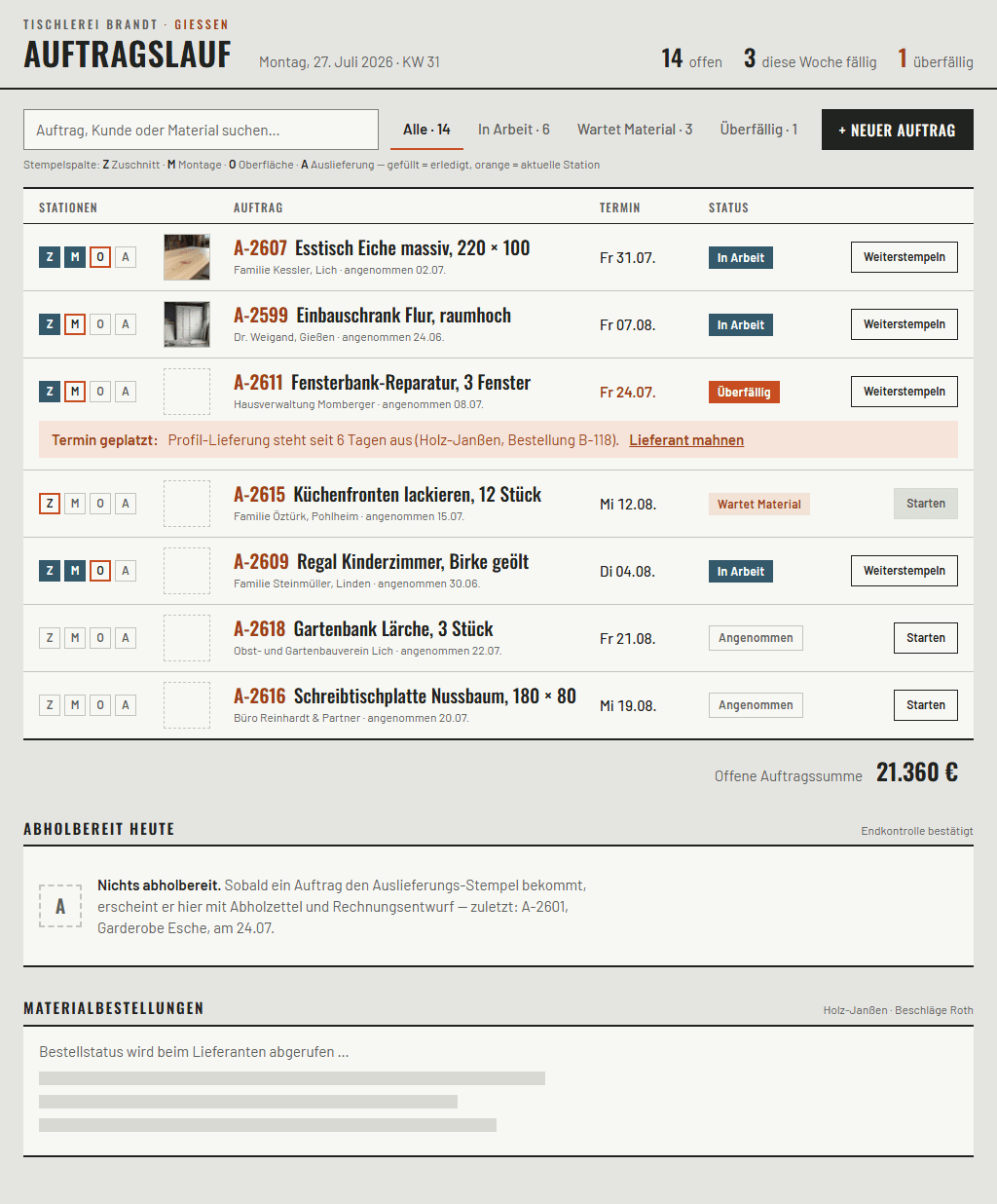 Werkbank01 · Order management
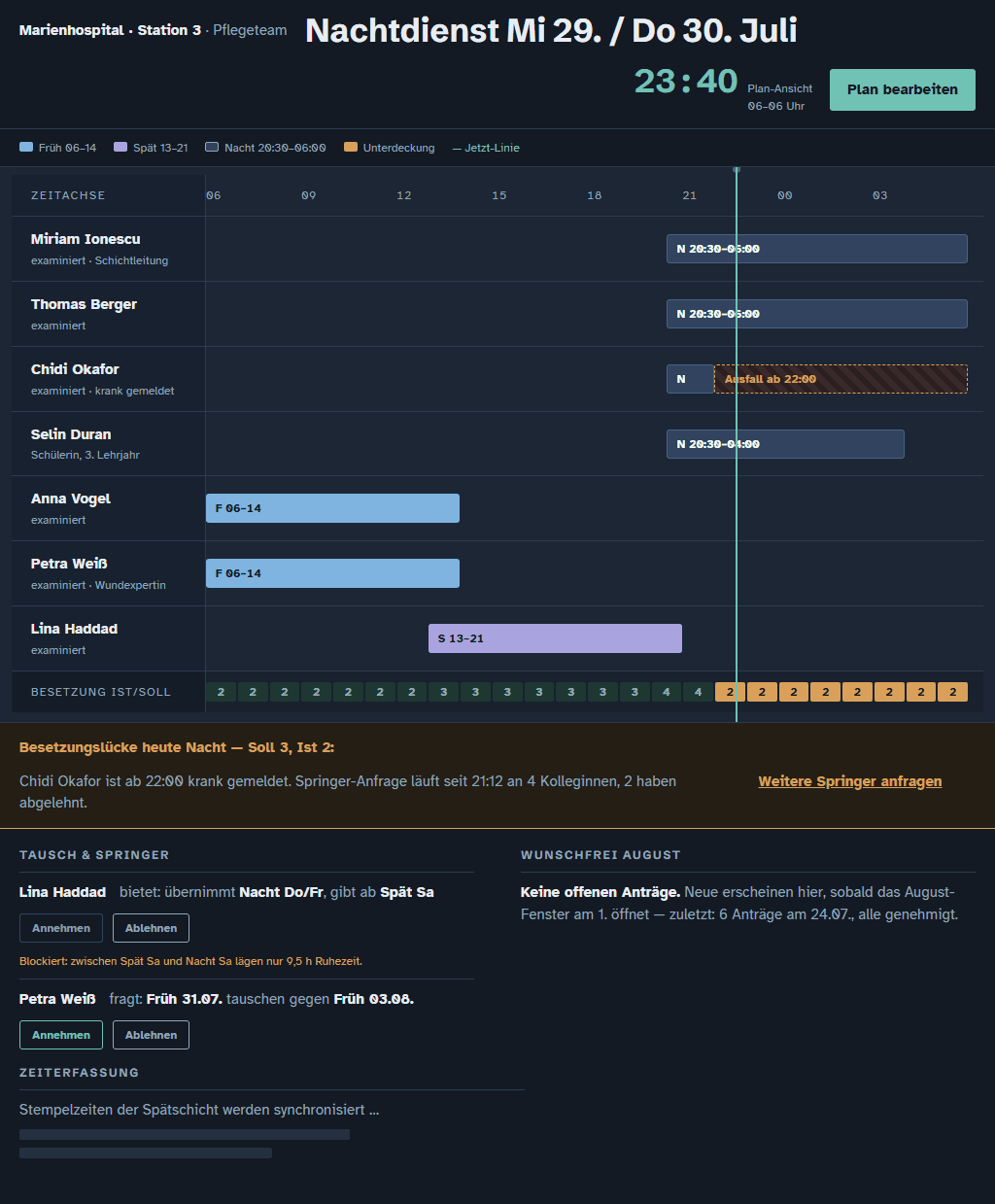 Nachtschicht02 · Shift plan
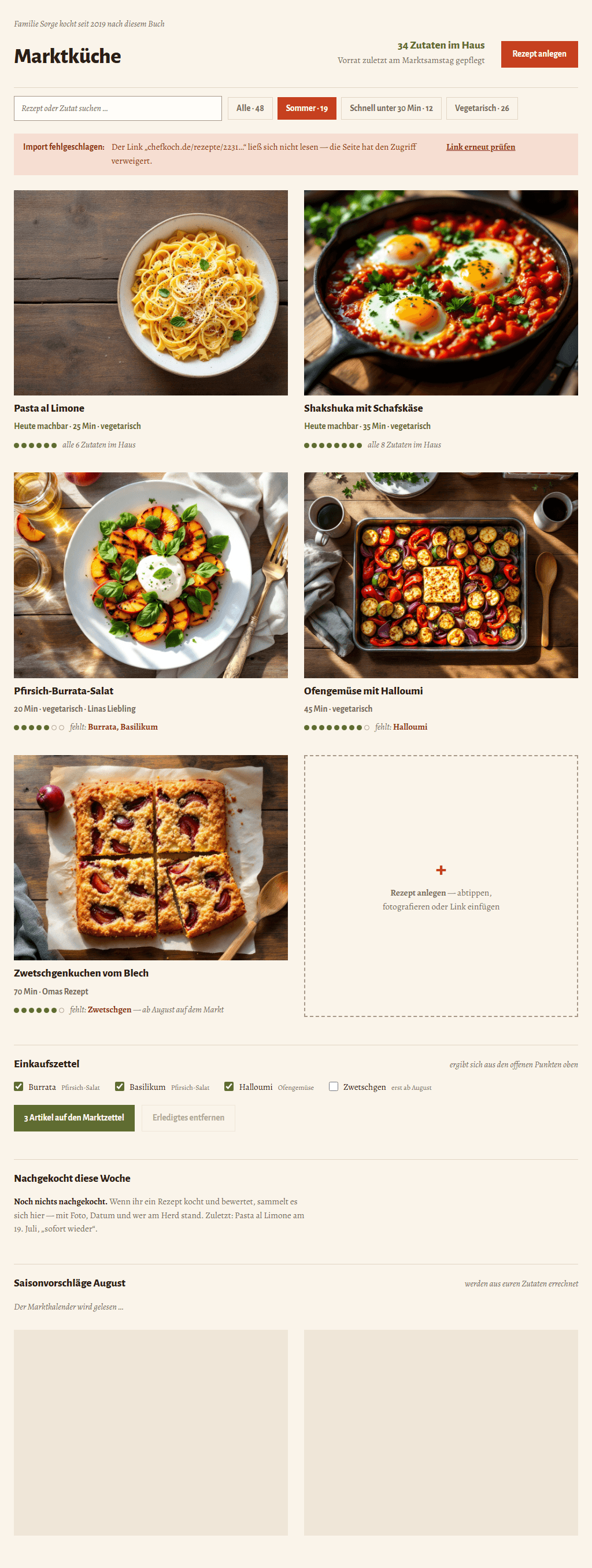 Marktküche03 · Recipe collection
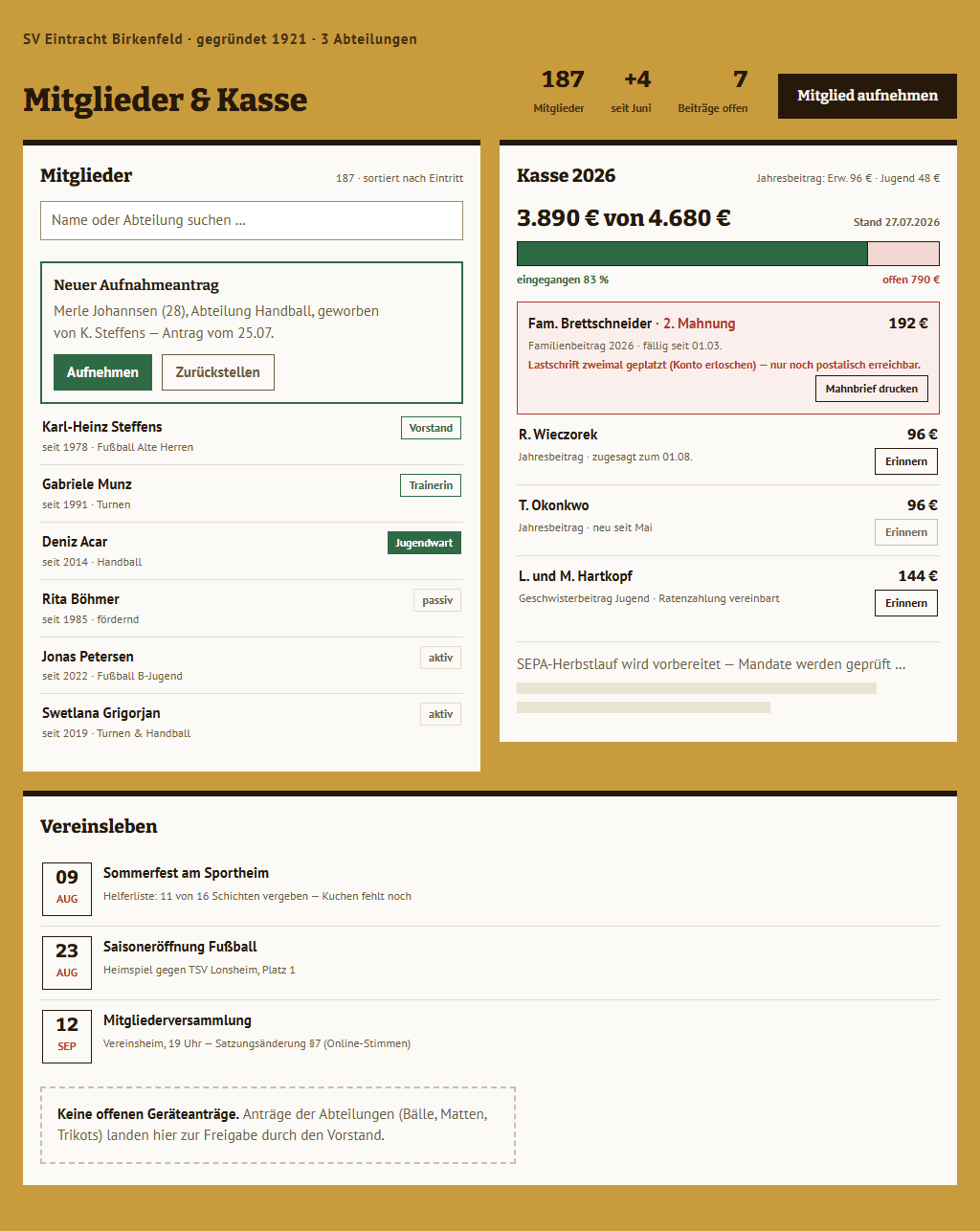 Vereinsheim04 · Club management
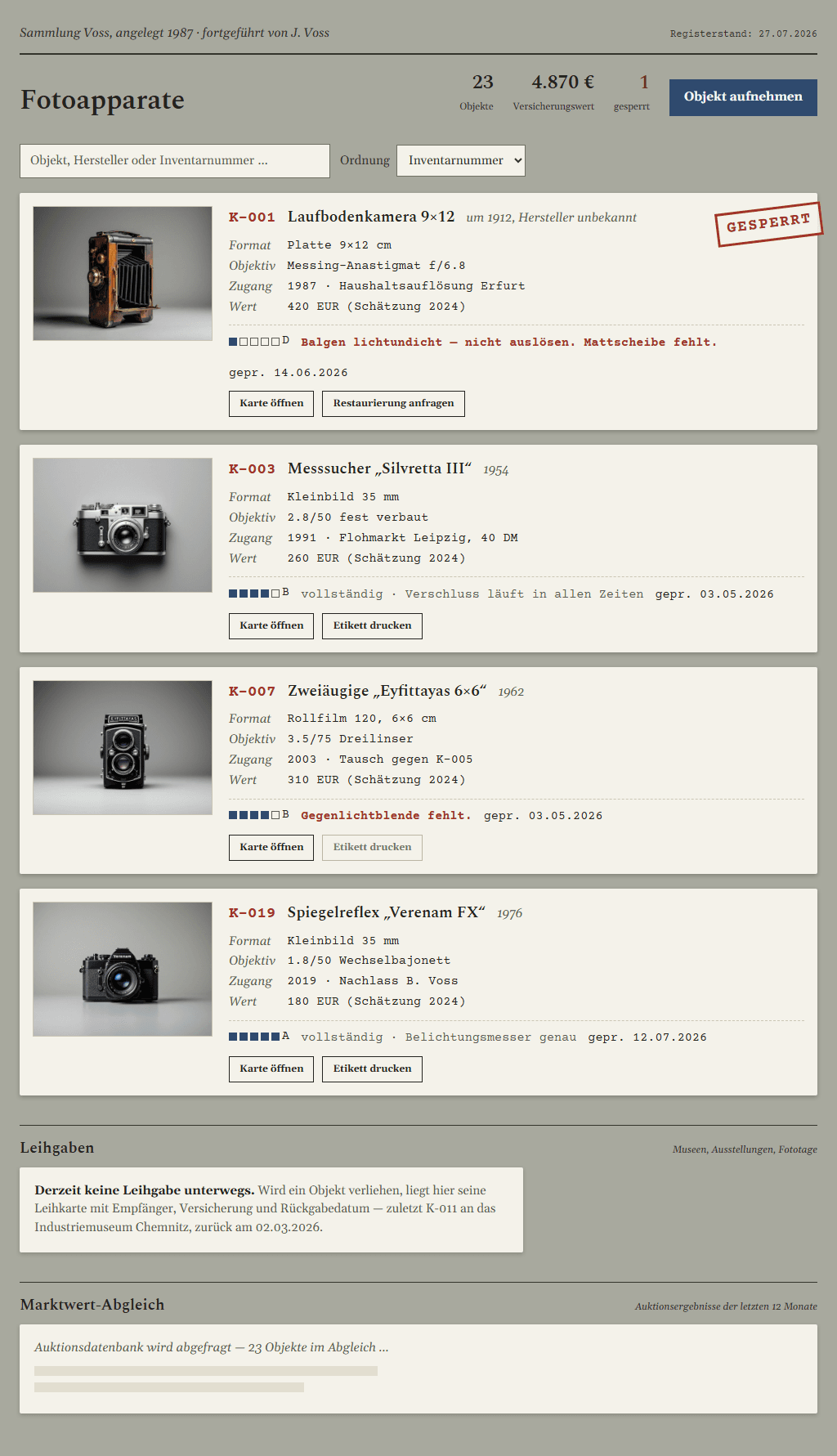 Archivkarte05 · Collection catalogue
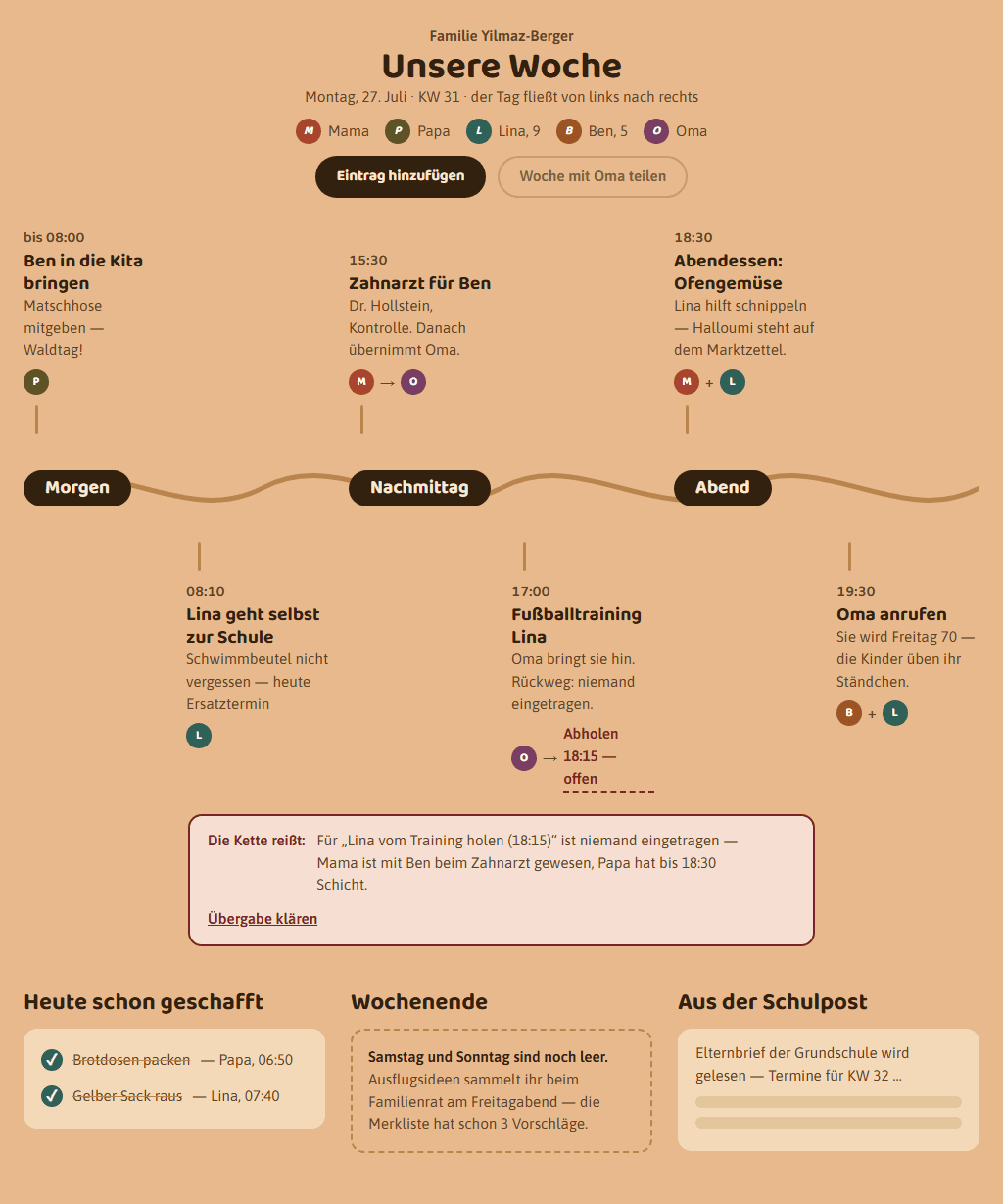 Familienfluss06 · Weekly planner
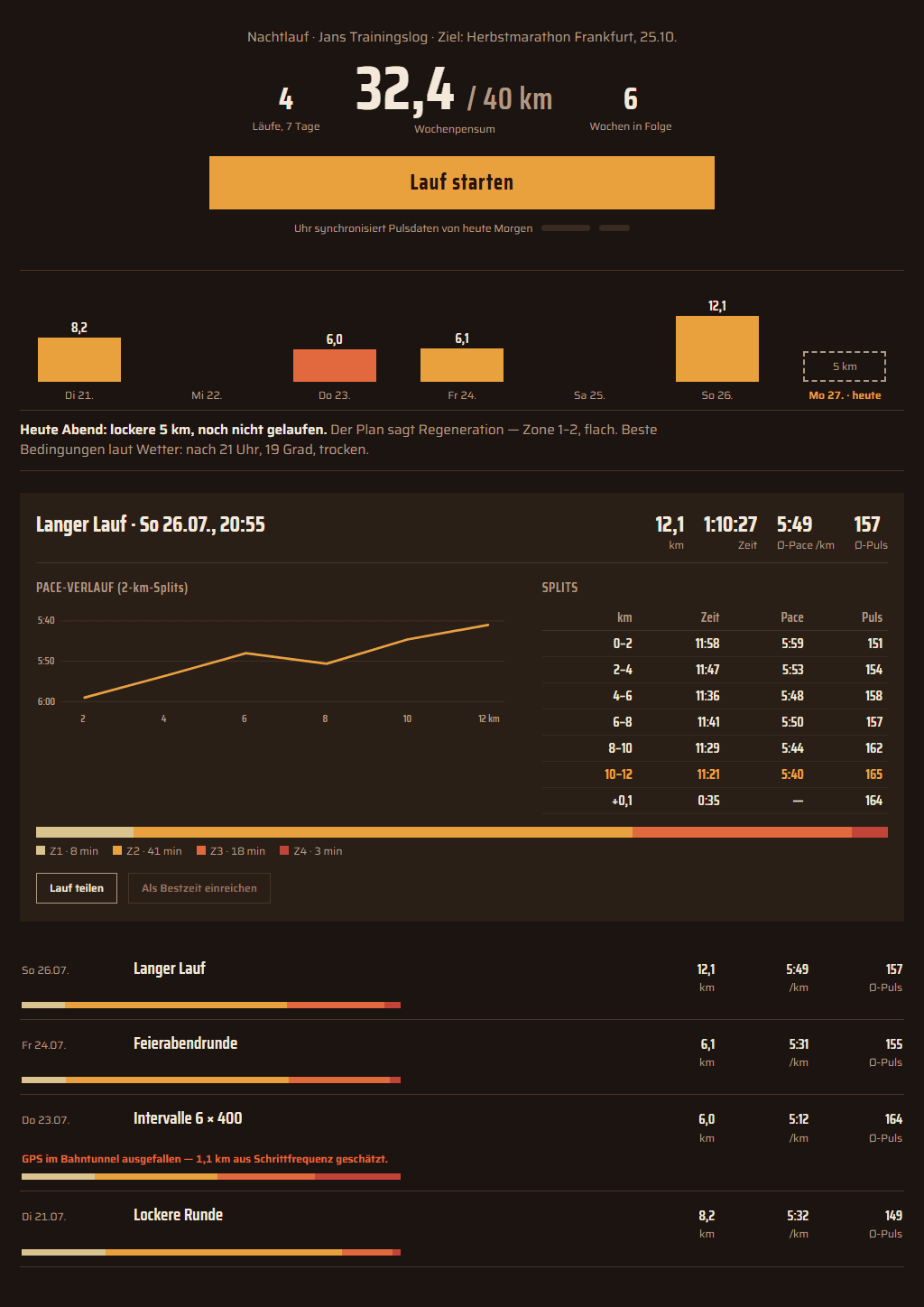 Nachtlauf07 · Training log
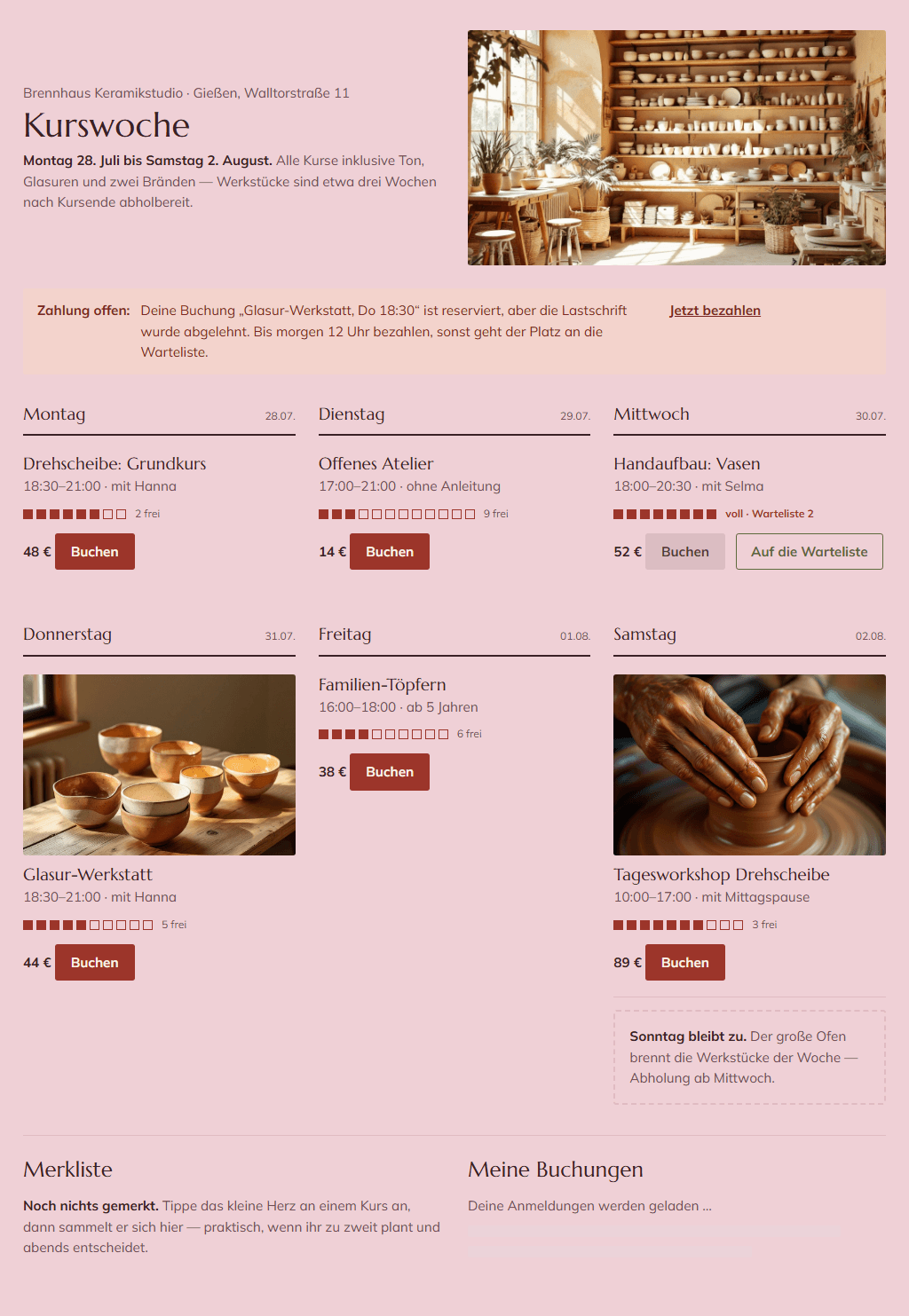 Studiozeit08 · Course booking
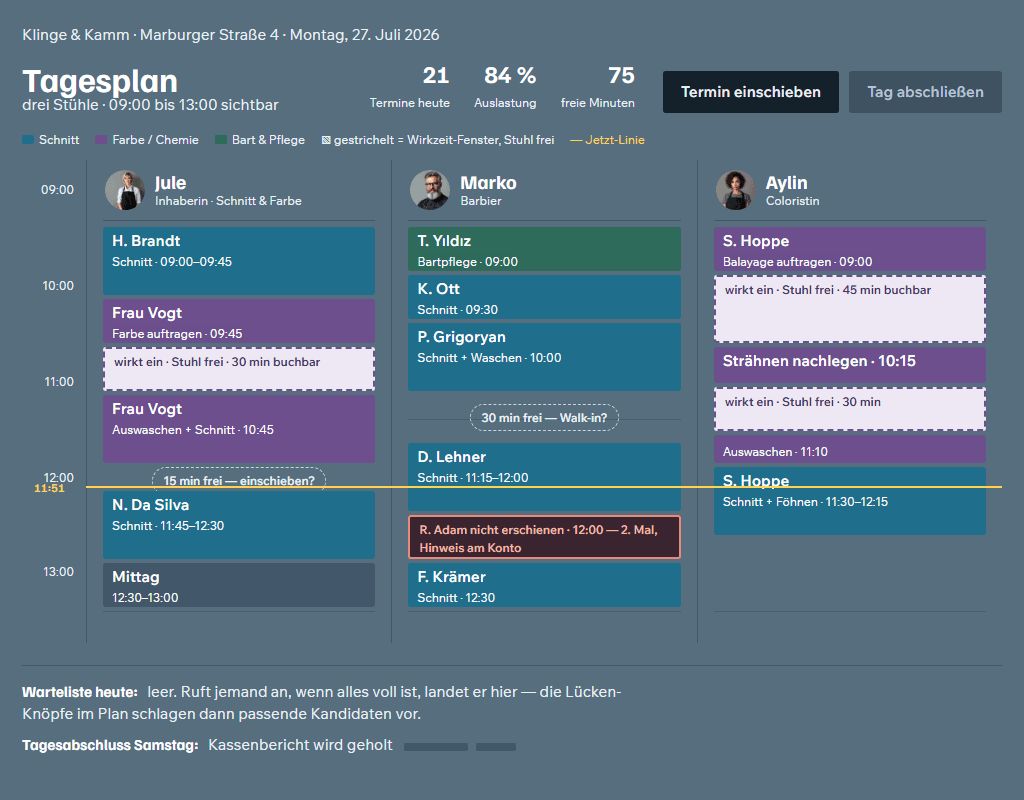 Salonplan09 · Appointment planner
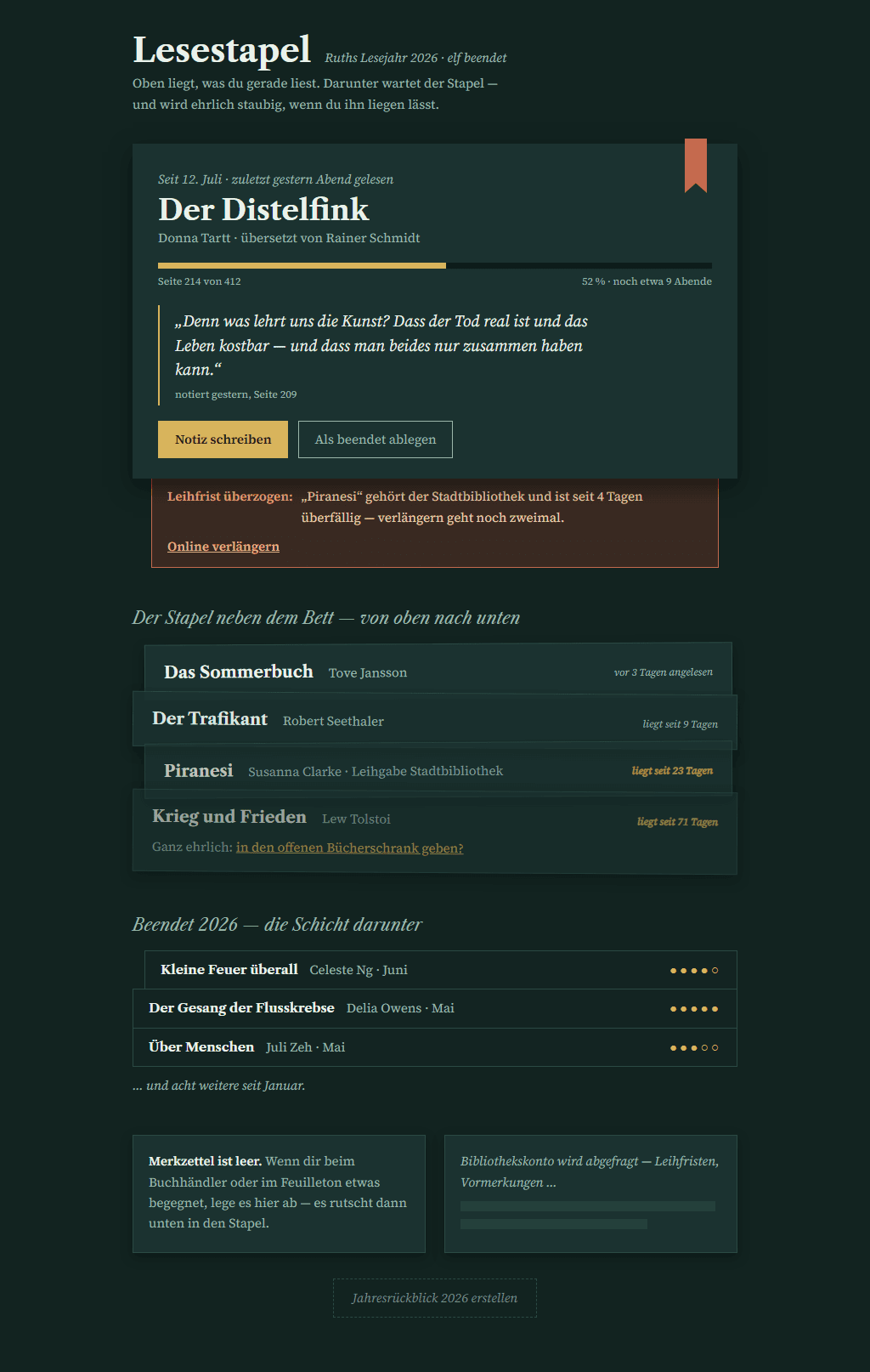 Lesestapel10 · Reading journal
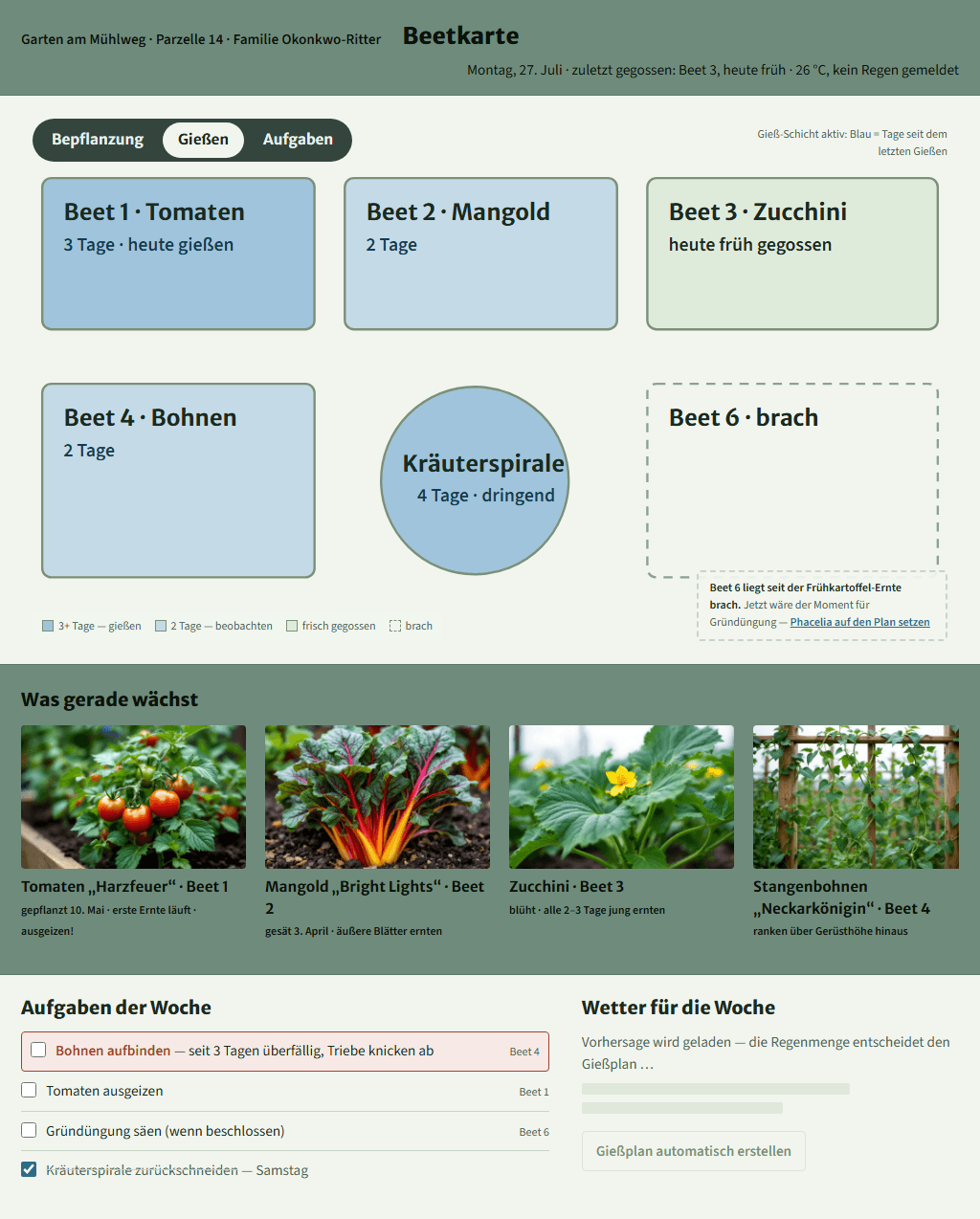 Beetkarte11 · Garden planner
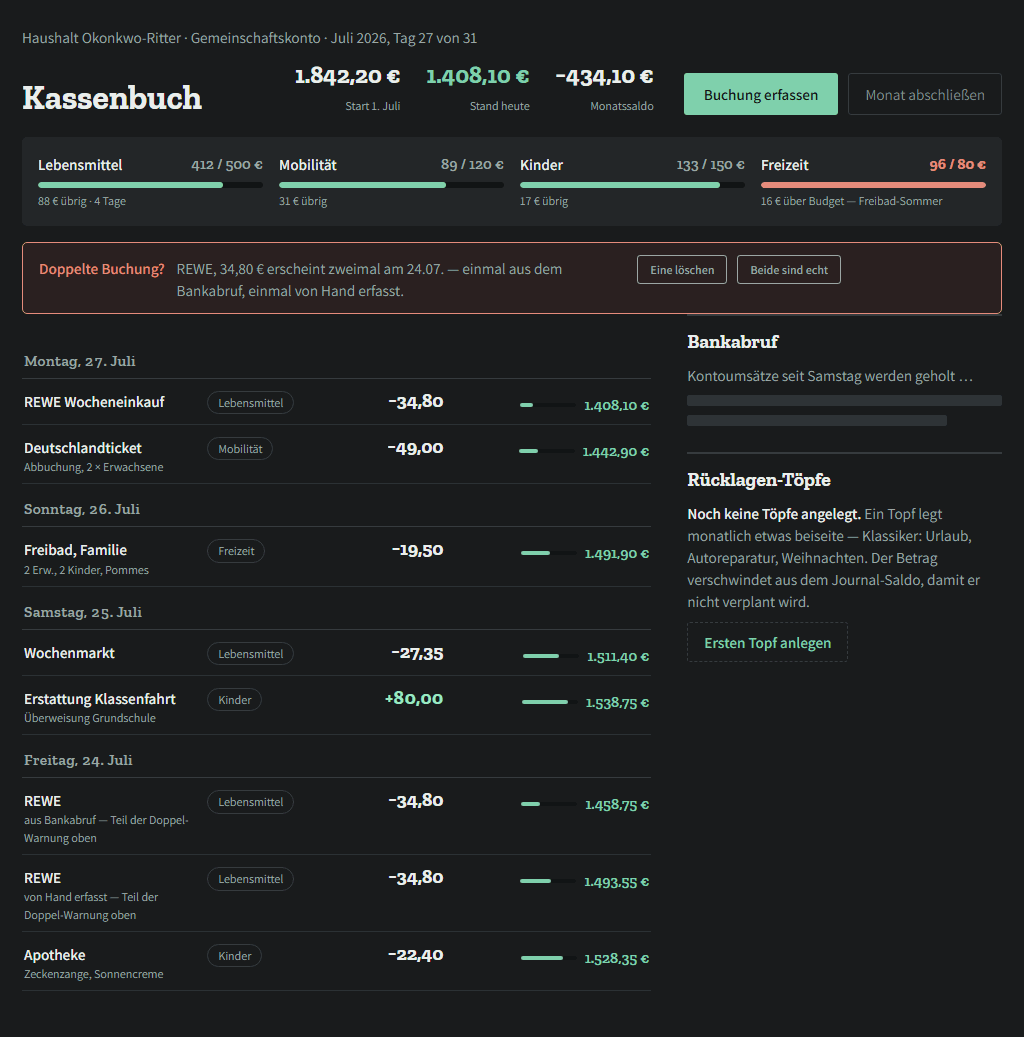 Kassenbuch12 · Household ledger
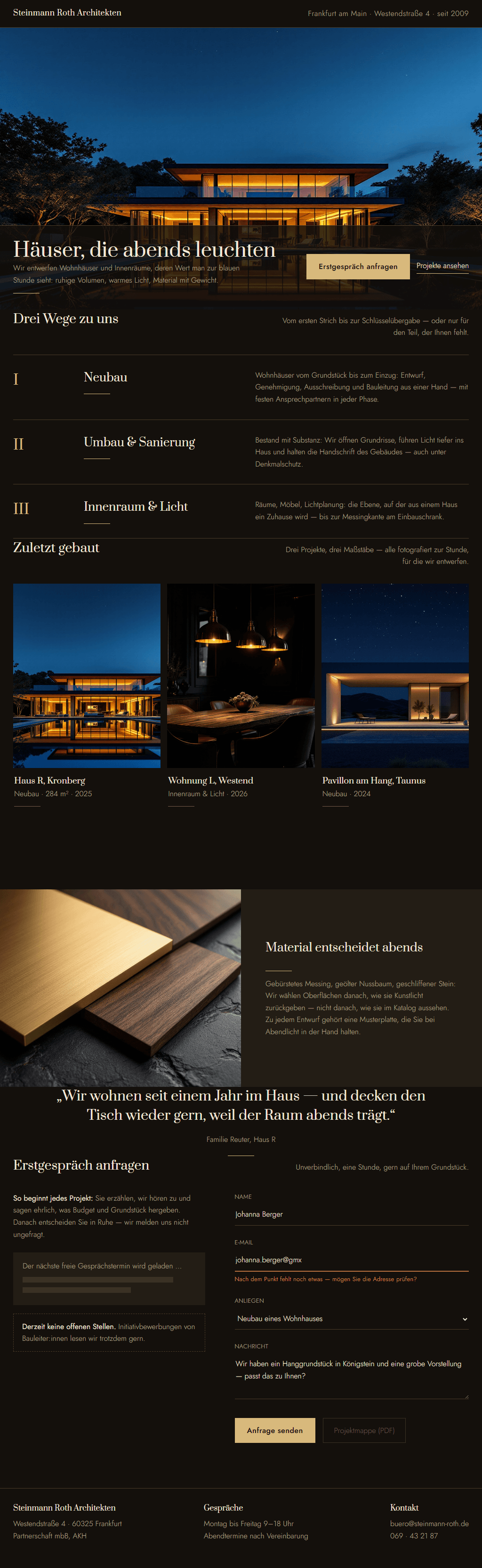 Goldstunde13 · Website · Holiday villa
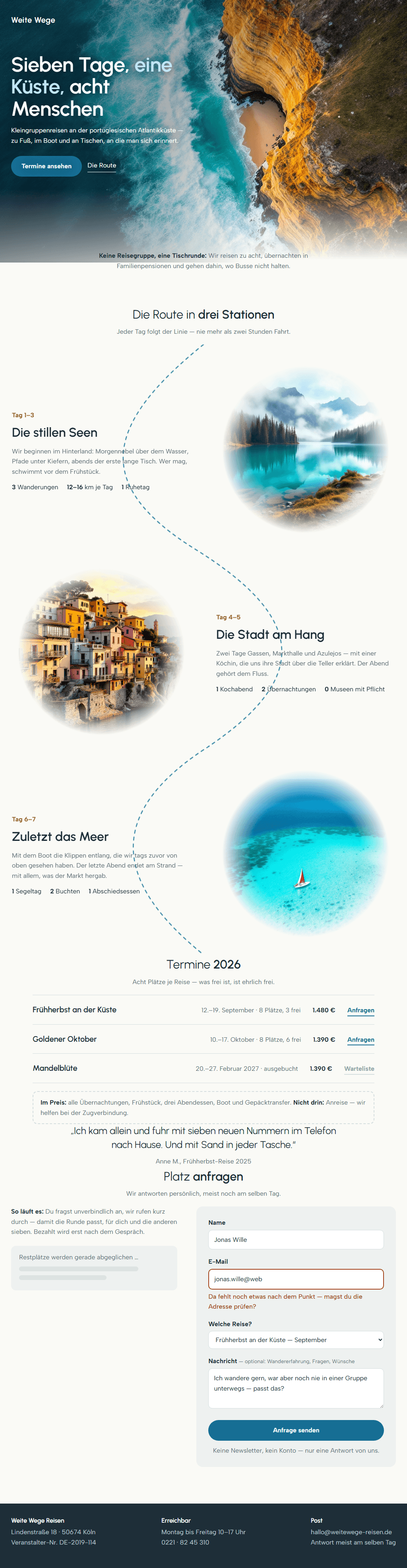 Fernwehkarte14 · Website · Travel
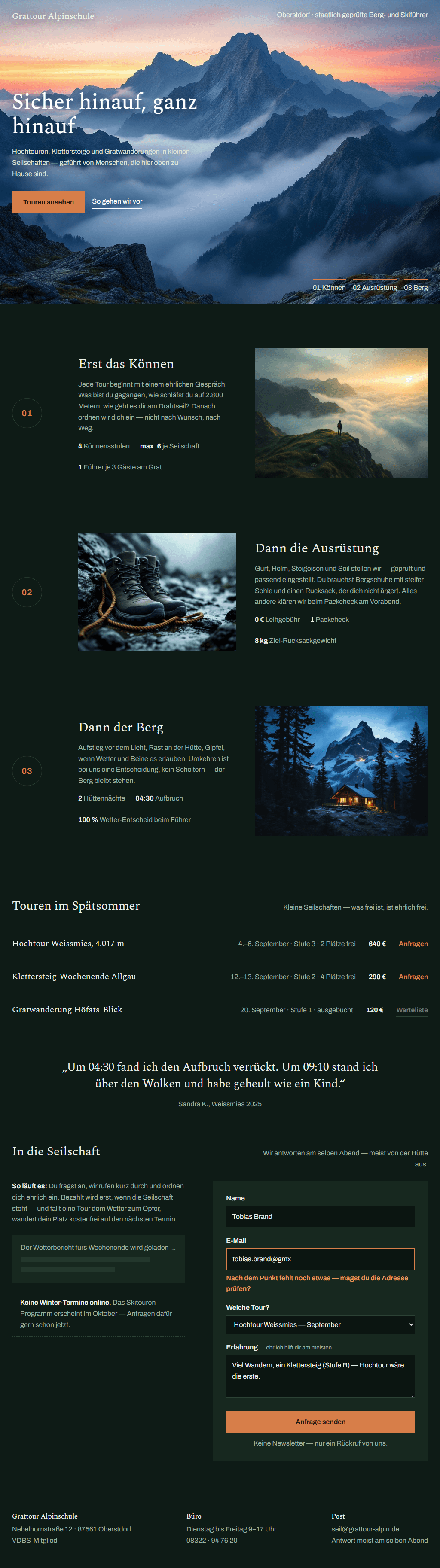 Gipfellicht15 · Website · Mountain tours
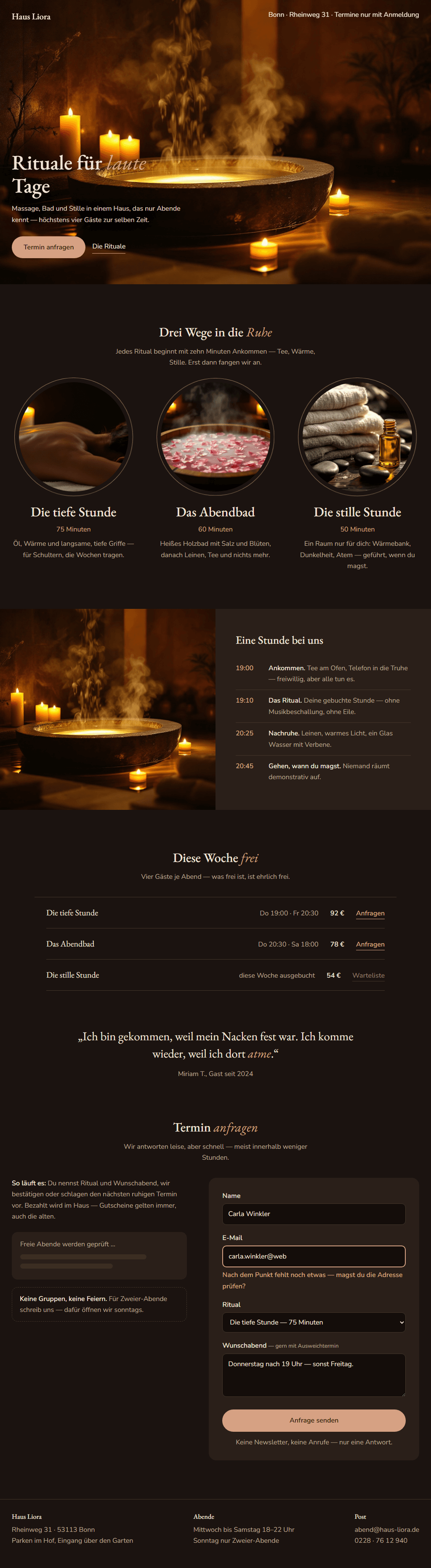 Samtruhe16 · Website · Wellness
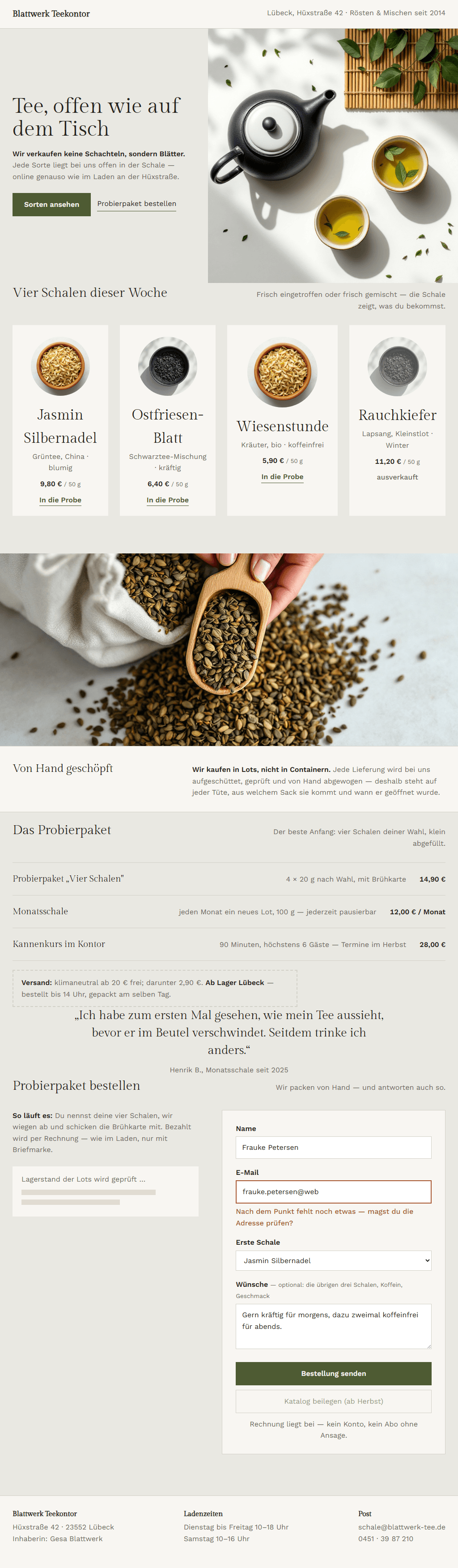 Steinlage17 · Website · Manufactory
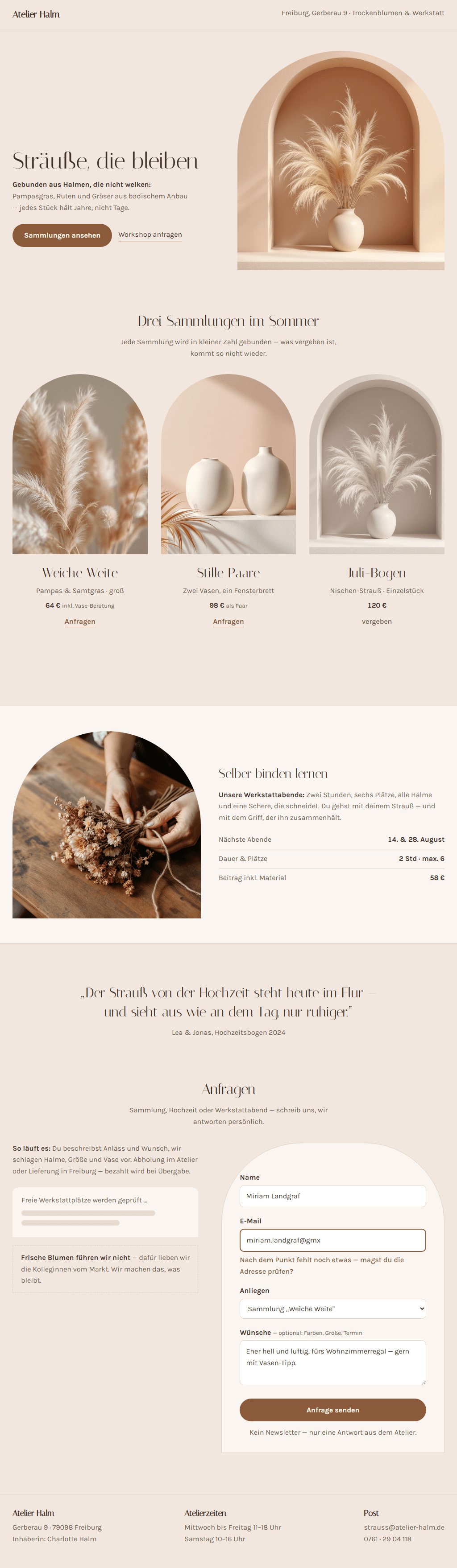 Bogenlicht18 · Website · Floristry
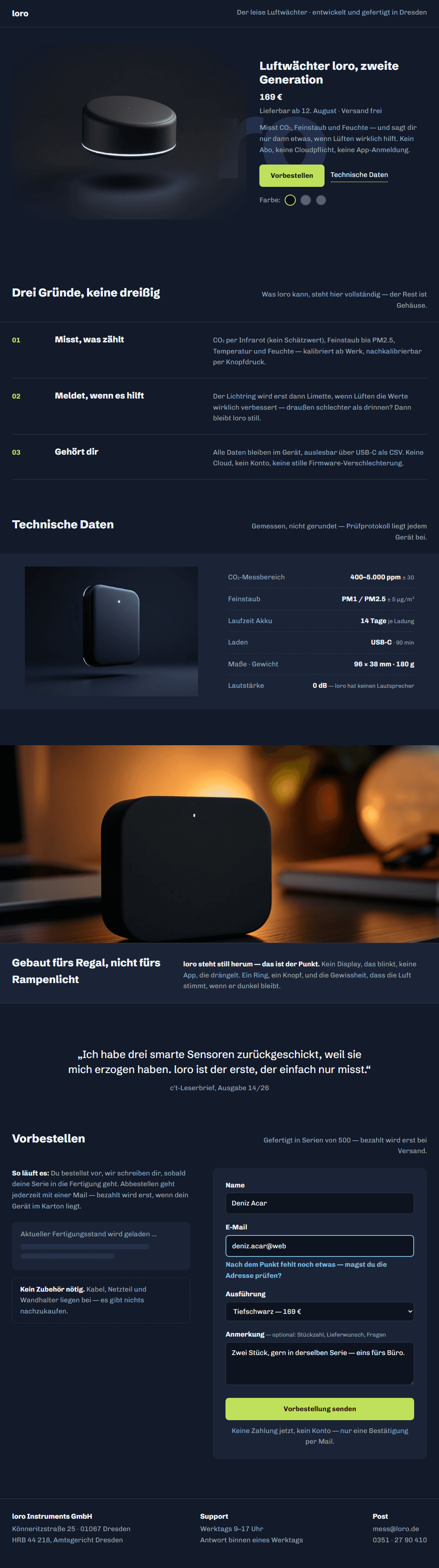 Nachtvitrine19 · Website · Product stage
Who it is for
Your line of work has a page of its own
The same platform, but in your language — with the example that matches your work and the questions actually asked there.
For clubs and associations
Members, fees, treasury, club life.
For makers and small shops
Range, provenance, orders, courses.
For startups
Product launch, pre-orders, the application behind it.
And the questions that come before the line of work: What does custom software cost?, Is it GDPR-compliant? and Have it operated, or operate it yourself? — the honest guides to read before you commission.
Good to know
The questions that come first.
What exactly is FRIDGARD?
FRIDGARD is an AI software builder that also runs what it builds: you describe your project in a conversation, and out of it grows a custom web application — no coding, no template kit. You don't get something off the shelf: you get your own application with its own database, its own design and its own home on our hardware in Germany — operations, backups and updates included.
Do I need to know how to code?
No. You describe your project in a conversation, in your own words; Verja designs and builds. You confirm the planned scope before anything is built.
Where does my data live?
In your own house: a dedicated micro-VM with its own kernel, on our own hardware in Falkenstein, Germany. Nothing is shared with other customers.
Which AI works on my application?
Exclusively European AI: models by Mistral from Paris. No detour through third countries.
What happens after go-live?
FRIDGARD keeps carrying: operations, backups and updates are included for good. And every later change passes the same verification chain as the first.
How secure is my application?
The vault is the beginning, not the end: as data layers and team accounts arrive, the verification chain grows its own security stations — dependency checks, a search for accidentally embedded secrets, an access-rights probe. And your application is delivered under an address of its own, strictly separated from the platform.
Can my team work with it?
Yes. At go-live your application gets accounts and roles for your team. The first draft deliberately comes without a login — you see and use your application before anyone has to hand out a password.
What about the EU AI Act?
Its transparency duties are part of the construction here, not a leaflet: Verja identifies herself as AI in the conversation, and every application built carries a machine-readable provenance mark. The imagery of this page is AI-generated and labelled as such in the footer; all building is done exclusively with European models.
Where does the name FRIDGARD come from?
From Old Norse: friðr, peace, and garðr, the enclosure — the protected homestead. Hence the way this page is built: walls, gate, ground. And Verja? Old Norse for “to defend, to protect”.
Something sounds too big?
Then tell us — we will take the sentence out or cut it down. What is written here describes the product FRIDGARD is and is becoming — and we let ourselves be measured against it.
The waitlist
FRIDGARD opens in waves.
Sign up — you will hear from us as soon as your wave is up.